
[align=center]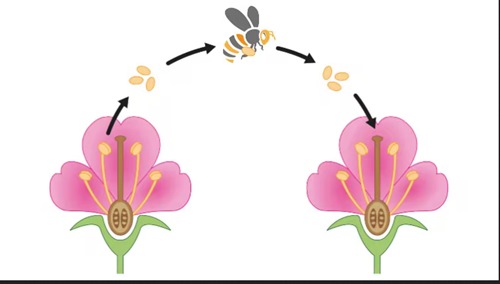
Biology Igcse Course Unit 16
Published 6/2026
MP4 | Video: h264, 1920x1080 | Audio: AAC, 44.1 KHz, 2 Ch
Language: English | Duration: 2h 13m | Size: 3.36 GB
Reproduction
What you'll learn
In this course students will learn exactly what they need to know for their Biology IGCSE exams. Students will learn about
1. Describe asexual reproduction as a process resulting in the production of genetically identical offspring from one parent
2. Identify examples of asexual reproduction in diagrams, images and information provided
3. Discuss the advantages and disadvantages of asexual reproduction
(a) to a population of a species in the wild[/center]
(b) to crop production
4. Describe sexual reproduction as a process involving the fusion of the nuclei of two gametes to form a zygote and the production of offspring
5. Describe fertilisation as the fusion of the nuclei of gametes
6. State that nuclei of gametes are haploid and that the nucleus of a zygote is diploid
7. Discuss the advantages and disadvantages of sexual reproduction
(a) to a population of a species in the wild
(b) to crop production
8. Identify in diagrams and images and draw the parts of an insect-pollinated flower
9. State the functions of the structures of the flower
9. Identify in diagrams and images and describe the anthers and stigmas of a wind-pollinated flower
10. Distinguish between the pollen grains of insect-pollinated and wind-pollinated flowers
11. Describe pollination as the transfer of pollen grains from an anther to a stigma
12. Describe self-pollination
13. Describe cross-pollination
14. Discuss the potential effects of self-pollination and cross-pollination on a population
15. State that fertilisation occurs when a pollen nucleus fuses with a nucleus in an ovule
16. Describe the structural adaptations of insect-pollinated and wind-pollinated flowers
17. Investigate and describe the environmental conditions that affect germination of seeds
18. Describe the growth of the pollen tube and its entry into the ovule followed by fertilisation
19. Identify on diagrams and state the functions of the parts of the male reproductive system
20. Identify on diagrams and state the functions of the parts of the female reproductive system
21. Describe fertilisation as the fusion of the nuclei from a male gamete (sperm) and a female gamete (egg cell)
22. Explain the adaptive features of sperm, limited to: flagellum, mitochondria and enzymes in the acrosome
23. Explain the adaptive features of egg cells, limited to: energy stores and the jelly coat that changes at fertilisation
24. Compare male and female gametes in terms of: size, structure, motility and numbers
25. State that in early development, the zygote forms an embryo which is a ball of cells that implants into the lining of the uterus
26. Identify on diagrams and state the functions of different parts in the development of the fetus
27. Describe the function of the placenta and umbilical cord
28. State that some pathogens and toxins can pass across the placenta and affect the fetus
29. Describe the roles of testosterone and oestrogen in the development and regulation of secondary sexual characteristics during puberty
30. Describe the menstrual cycle in terms of changes in the ovaries and in the lining of the uterus
31. Describe the sites of production of oestrogen and progesterone in the menstrual cycle and in pregnancy
32. Explain the role of hormones in controlling the menstrual cycle and pregnancy, limited to FSH, LH, progesterone and oestrogen
33. Describe a sexually transmitted infection (STI) as an infection that is transmitted through sexual contact
34. State that human immunodeficiency virus (HIV) is a pathogen that causes an STI
35. State that HIV infection may lead to AIDS
36. Describe the methods of transmission of HIV
37. Explain how the spread of STIs is controlled
Requirements
Access to a device to watch lessons - phone, tablet, or computer No textbook needed - everything is covered in the course
Description
This Biology course is structured specifically around the latest Cambridge IGCSE and GCE Biology syllabus, ensuring complete and accurate coverage of every objective students need to master for their examinations. Students preparing for AP Biology, IB Biology, or equivalent international curricula will also find this course highly valuable for building a thorough understanding of the theory component of their exams, as the core biological concepts covered are closely aligned across these specifications.
The course focuses onUnit 16: Reproduction, one of the most content-rich and wide-ranging units in the entire Biology course. From asexual and sexual reproduction to plant pollination, human reproductive systems, sex hormones, the menstrual cycle and sexually transmitted infections - this unit covers a huge amount of ground and is examined consistently and in depth across all papers. Every syllabus objective is covered in full, with zero gaps.
Every syllabus objective is covered comprehensively, without overloading you with irrelevant material. The content is precise, focused, and directly aligned with what examiners expect - so you spend your time learning exactly what matters and nothing that does not. Throughout every lesson, real past paper questions are used to show you how this unit is examined, what a full-mark answer looks like, and the common mistakes that cost students marks every single year. You will know not just what to say, but how to say it - and equally importantly, what not to write.
The course builds strongexam technique alongside content knowledge, covering every question type across Papers 1, 2, 3 and 4 - from multiple choice and short answer to structured and extended response questions. Students leave this course knowing exactly how to approach any question on this unit regardless of how it is worded.
Every video lesson comes with adownloadable PDF resource that contains everything you need to know for that specific lesson - definitions, diagrams, key points and exam tips - all written and structured to match exactly what the syllabus requires. There is no need to open a textbook, search for revision guides, or look anything up online. Simply watch the lesson, download скачать the PDF, study from it, and go straight to past papers. Everything you need is right here in one place.
Thepractical component is fully covered in this course. Students are taken through two core germination investigations - the investigation into the need for water in germination, and the investigation into the effect of temperature on germination. Both experiments are broken down in full - covering the method, variables, expected results, data interpretation and evaluation - with specific training on how to answer practical questions inPapers 5 and 6 that test experimental skills, data analysis and scientific reasoning under exam conditions.
This course is ideal for students aiming for high achievement and A* grades in Biology examinations.
Who this course is for
IGCSE Biology Students Preparing for External Exams
https://rapidgator.net/file/3b31a2ee4500dc46be52bb88040873ed/Biology_IGCSE_Course_Unit_16.part4.rar.html
https://rapidgator.net/file/98e4904942e … 3.rar.html
https://rapidgator.net/file/db9523177fa … 2.rar.html
https://rapidgator.net/file/99734289130 … 1.rar.htmlhttps://nitroflare.com/view/544ADEB099B … .part4.rar
https://nitroflare.com/view/C7F9E22EA88 … .part3.rar
https://nitroflare.com/view/CDC2A16D46B … .part2.rar
https://nitroflare.com/view/738265266CE … .part1.rar

