
[align=center]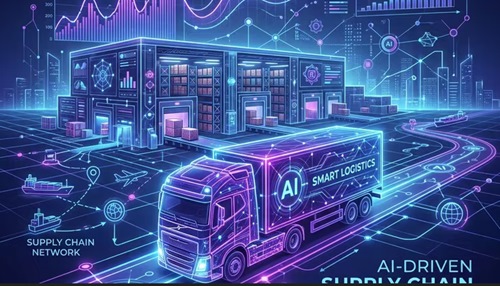
Ai-Driven Supply Chain & Inventory Optimization
Published 6/2026
MP4 | Video: h264, 1920x1080 | Audio: AAC, 44.1 KHz, 2 Ch
Language: English | Duration: 1h 48m | Size: 949.37 MB
AI supply chain optimization: automate safety stocks, forecast SKU demand, and optimize logistics routing
What you'll learn
Predict SKU Demand Volatility: Segment product catalogs using ABC/XYZ analysis and select optimal models (SARIMA vs. XGB oost) incorporating external demand driv
Calculate Dynamic Safety Stocks: Deploy standard deviation calculations for demand and lead times to set automatic inventory buffers that reduce holding costs.
Optimize Logistics Fleet Routing: Solve the Vehicle Routing Problem (VRP) using heuristics to schedule daily shipments, eliminate empty miles, and save fuel.
Automate Freight Invoice Auditing: Build a three-way reconciliation check (Rate, Physical, and Distance) to identify carrier overcharges and recover accessorial
Mitigate Algorithm Aversion: Implement Explainable AI (XAI) trust cards to display forecast logic and build frontline confidence on the warehouse floor.
Establish Override Governance: Deploy a structured 3-gate override protocol with reason registries and value calibration to regulate manual inventory overrides.
Design a Logistics AI Pilot: Create a realistic, executive-ready deployment blueprint to run a warehouse or route optimization pilot within 30 days.
Requirements[/center]
Basic Operations & Supply Chain Foundations: Familiarity with inventory management concepts, shipping/warehousing workflows, or basic operations metrics (like inventory turns, carrying costs, and lead times).
No Coding Required: Zero programming or data science background is required. All mathematical formulas, API queries, and decision matrices are provided as clean business templates.
Access to Basic Spreadsheets: A working knowledge of standard business tools like Microsoft Excel or Google Sheets.
Description
Welcome to the second course in the Operational AI Series:AI-Driven Supply Chain & InventoryOptimisation.
Having established your margin defence in Course 1, it is time to scale your efficiency from the back office directly onto the warehouse floor, supplier networks, and shipping routes. Traditional supply chain management relies on lagging indicators, arbitrary safety stock buffers, and manual carrier audits. These legacy practices tie up millions in working capital and lead to stockouts or costly fleet routing waste. This course introduces you toAlgorithmic Supply Chain Scaling, a data-driven approach to optimise your inventory, replenishment cycles, and logistics network.
Led by Kamel Elmangalifi, a veteran operations executive with over 25 years of experience leading multi-site operations and large teams across Egypt, Saudi Arabia, and the UAE, this course provides you with executive-ready playbooks, mathematical formulas, and templates.
Key areas covered in this course
-Predictive Demand Forecasting: Segment SKUs using the ABC/XYZ matrix and deploy non-linear models (XGB oost, Prophet) incorporating weather and promotions.
-Dynamic Safety Stock & ROP: Automate replenishment by calculating safety buffers that adapt dynamically to demand volatility and supplier lead-time variances.
-Logistics & RouteOptimisation: Solve the Vehicle Routing Problem (VRP) to optimise carrier routes, eliminate empty backhaul mileage waste, and set up automated three-way freight auditing.
-Frontline Trust & Governance: Overcome 'algorithm aversion' using Explainable AI (XAI) trust cards and establish a structured three-gate override protocol (value limits and reason registries).
By completing the hands-on capstone project, you will design a logistics AI pilot to optimise inventory turns and unlock trapped working capital. Whether you are a COO, supply chain director, logistics manager, or operations analyst, this course equips you with the strategic toolkit to lead high-performance autonomous logistics operations.
Who this course is for
Supply Chain & Operations Leaders (COOs, Directors, Inventory Managers): Executives looking to scale operational efficiency, reduce inventory carrying costs, and automate purchase orders.
Logistics & Fleet Managers: Professionals responsible for transport networks who want to optimize routing schedules and audit shipping carrier invoices.
Inventory Control Managers & Procurement Analysts: Technical staff looking to transition from manual spreadsheets to predictive replenishment systems.
Operations Transformation & AI Consultants: Professionals helping enterprise clients digitize logistics, manage frontline reskilling, and build algorithmic trust gates.
https://nitroflare.com/view/693BF192F5661F5/AI-Driven_Supply_Chain_%26amp%3B_Inventory_Optimization.rar

