
[align=center]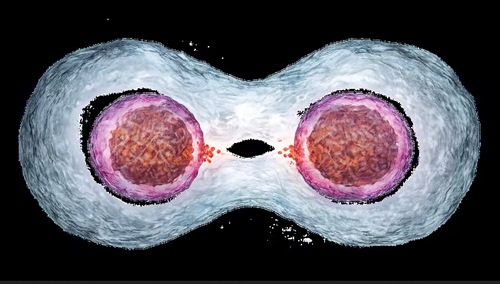
Biology Igcse Course Unit 17
Published 6/2026
MP4 | Video: h264, 1920x1080 | Audio: AAC, 44.1 KHz, 2 Ch
Language: English | Duration: 2h 1m | Size: 2.4 GB
Inheritance
What you'll learn
In this course students will learn exactly what they need to know for their Biology IGCSE exams. Students will learn about
1. State that chromosomes are made of DNA, which contains genetic information in the form of genes
2. Define a gene as a length of DNA that codes for a protein
3. Define an allele as an alternative form of a gene
4. Describe the inheritance of sex in humans with reference to X and Y chromosomes
5. State that the sequence of bases in a gene determines the sequence of amino acids used to make a specific protein
6. Explain that different sequences of amino acids give different shapes to protein molecules
7. Explain that DNA controls cell function by controlling the production of proteins, including enzymes, membrane carriers and receptors for neurotransmitters
8. Explain how a protein is made, limited to[/center]
(a) the gene coding for the protein remains in the nucleus
(b) messenger RNA (mRNA) is a copy of a gene
(c) mRNA molecules are made in the nucleus and move to the cytoplasm
(d) the mRNA passes through ribosomes
(e) the ribosome assembles amino acids into protein molecules
(f) the specific sequence of amino acids is determined by the sequence of bases in the mRNA
9. Explain that most body cells in an organism contain the same genes, but many genes in a particular cell are not expressed
10. Describe a haploid nucleus as a nucleus containing a single set of chromosomes
11. Describe a diploid nucleus as a nucleus containing two sets of chromosomes
12. State that in a diploid cell, there is a pair of each type of chromosome and in a human diploid cell there are 23 pairs
13. Describe mitosis as nuclear division giving rise to genetically identical cells
14. State the role of mitosis in growth, repair of damaged tissues, replacement of cells and asexual reproduction
15. State that the exact replication of chromosomes occurs before mitosis
16. State that during mitosis, the copies of chromosomes separate, maintaining the chromosome number in each daughter cell
17. Describe stem cells as unspecialised cells that divide by mitosis to produce daughter cells that can become specialised for specific functions
18. State that meiosis is involved in the production of gametes
19. Describe meiosis as a reduction division in which the chromosome number is halved from diploid to haploid resulting in genetically different cells
20. Describe inheritance as the transmission of genetic information from generation to generation
21. Describe genotype as the genetic make-up of an organism and in terms of the alleles present
22. Describe phenotype as the observable features of an organism
23. Describe homozygous as having two identical alleles of a particular gene
24. State that two identical homozygous individuals that breed together will be pure-breeding
25. Describe heterozygous as having two different alleles of a particular gene
26. State that a heterozygous individual will not be pure-breeding
27. Describe a dominant allele as an allele that is expressed if it is present in the genotype
28. Describe a recessive allele as an allele that is only expressed when there is no dominant allele of the gene present in the genotype
29. Interpret pedigree diagrams for the inheritance of a given characteristic
30. Use genetic diagrams to predict the results of monohybrid crosses and calculate phenotypic ratios, limited to 1 : 1 and 3 : 1 ratios
31. Use Punnett squares in crosses which result in more than one genotype to work out and show the possible different genotypes
32. Explain how to use a test cross to identify an unknown genotype
33. Describe codominance as a situation in which both alleles in heterozygous organisms contribute to the phenotype
34. Explain the inheritance of ABO blood groups: phenotypes are A, B, AB and O blood groups and alleles are IA, IB and Io
35. Describe a sex-linked characteristic as a feature in which the gene responsible is located on a sex chromosome
36. Describe red-green colour blindness as an example of sex linkage
37. Use genetic diagrams to predict the results of monohybrid crosses involving codominance or sex linkage and calculate phenotypic ratios
Requirements
Access to a device to watch lessons - phone, tablet, or computer No textbook needed - everything is covered in the course
Description
This Biology course is structured specifically around the latest Cambridge IGCSE and GCE Biology syllabus, ensuring complete and accurate coverage of every objective students need to master for their examinations. Students preparing for AP Biology, IB Biology, or equivalent international curricula will also find this course highly valuable for building a thorough understanding of the theory component of their exams, as the core biological concepts covered are closely aligned across these specifications.
The course focuses onUnit 17: Inheritance, one of the most intellectually challenging and most frequently examined units in the entire Biology course. Genetics requires a very specific type of thinking - precise definitions, accurate genetic diagrams, and the ability to apply concepts to unfamiliar contexts - and this course builds exactly those skills from the ground up.
Every syllabus objective is covered comprehensively, without overloading you with irrelevant material. The content is precise, focused, and directly aligned with what examiners expect - so you spend your time learning exactly what matters and nothing that does not. Throughout every lesson, real past paper questions are used to show you how this unit is examined, what a full-mark answer looks like, and the common mistakes that cost students marks every single year. You will know not just what to say, but how to say it - and equally importantly, what not to write.
The course builds strongexam technique alongside content knowledge, covering every question type across Papers 1, 2, 3 and 4 - from multiple choice and short answer to structured and extended response questions. Students leave this course knowing exactly how to approach any question on this unit regardless of how it is worded - including genetic diagram questions, Punnett squares, pedigree analysis, codominance, sex linkage and ABO blood group inheritance, all of which are broken down step by step with full worked examples drawn directly from past papers.
Every video lesson comes with adownloadable PDF resource that contains everything you need to know for that specific lesson - definitions, diagrams, key points and exam tips - all written and structured to match exactly what the syllabus requires. There is no need to open a textbook, search for revision guides, or look anything up online. Simply watch the lesson, download скачать the PDF, study from it, and go straight to past papers. Everything you need is right here in one place.
This unit is entirely theory-based - there are no practical experiments associated with it. This means every minute of the course is focused purely on building the depth of knowledge, precise scientific language and exam technique needed to score full marks across all theory papers. Particular attention is given to the areas students find most challenging - including constructing and interpreting genetic diagrams correctly, understanding the difference between genotype and phenotype, applying codominance and sex linkage to unfamiliar scenarios, and writing definitions that are precise enough to score full marks every time.
This course is ideal for students aiming for high achievement and A* grades in Biology examinations.
Who this course is for
IGCSE Biology Students Preparing for External Exams
https://rapidgator.net/file/1332b9de175ca6824c6e5410fbff3370/Biology_IGCSE_Course_Unit_17.part3.rar.html
https://rapidgator.net/file/d9351ac8240 … 2.rar.html
https://rapidgator.net/file/e5b6d1f9ebe … 1.rar.htmlhttps://nitroflare.com/view/A1005D32957 … .part3.rar
https://nitroflare.com/view/96D4866EDCD … .part2.rar
https://nitroflare.com/view/B290069BFD3 … .part1.rar

